
Asteron Verge
Beyond the known. Into the unexplored.
An alien frontier generated from a seed and streamed in as you travel. Explore its valleys, lakes, forests and caves, reshape the ground during play, and fight on it with other players. Everything on this page was recorded from the game.
Played online in Deathmatch
A frontier with no walls
Mesas and cliffs in layered rock, rivers that run down to lakes, forests of broad blue trees, fields of rock spires, and caves under the ground. The land goes on as far as you travel.


Ground with a history
Rivers cut their valleys, slopes settle to the angle loose rock holds, and cliffs show the layers they were cut from.
Six kinds of land
Each has its own ground, plants and rock, and the land between them blends from one to the next.
Places people built
Expedition outposts with their rovers and crates, trails between them, and bridges where the trails cross water.
Asteron Verge, as it runs
A minute and a half of the game on a desktop: the land, an outpost, a cave, a walk through a forest, the ground changed during play, two players seeing the same change, and a Deathmatch. Pick a chapter to start from it. The flights over the land use the game's own camera, moved by its developer tools; players explore on foot. Only the titles and captions were added.
Every place is one you can walk to
Trails join expedition outposts, bridges carry them over the rivers, and caves run under the ground. Walk to any of them, or keep walking.


Made from a seed, the same everywhere
Asteron Verge is not one fixed level. The land is worked out from a seed by the same rules on every machine, so every player and the server stand on the same ground.
- More detail near you and less far away, so the horizon stays in view without the ground cracking where the detail changes
- New ground is prepared ahead of where you are heading and drawn as it arrives
- Positions stay precise however far you go: the forest pictured under Discover was recorded a thousand kilometres from the start
- Memory stays bounded however long you travel: an hour of flying levels off and stays flat

The world remembers what you do
During a match you can raise and lower the ground, dig pits and holes, flatten and smooth it, lay roads, and clear away what stands on it. You can take your latest changes back and make them again, within the match that made them.

1The ground the world made
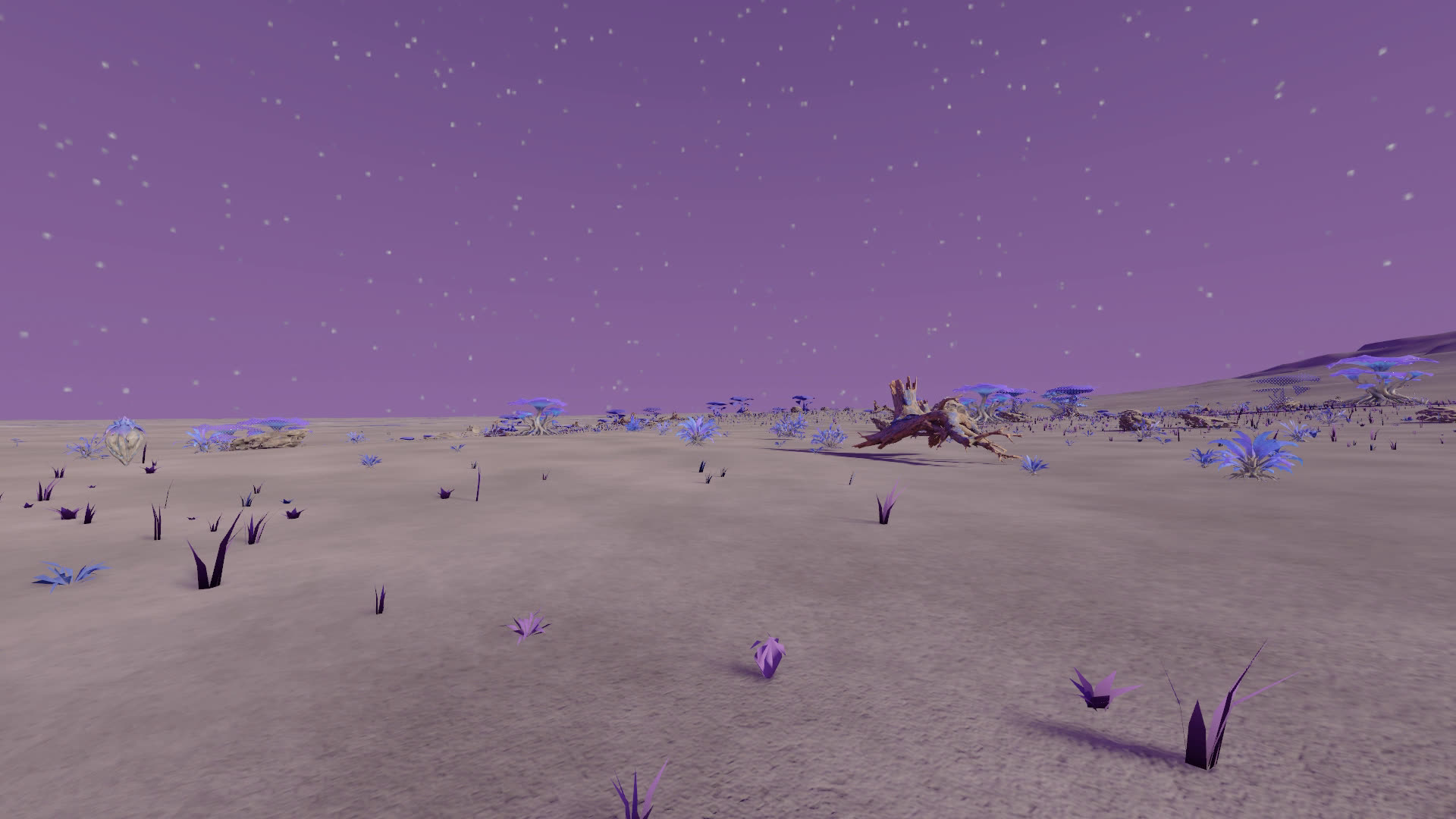
In-game captureBefore: the ground as the world made it 2What you do to it
- Raise or lower it
- Dig a pit or a hole
- Flatten it or smooth it
- Lay a road
- Clear what stands on it
Each change has a size limit.
3The ground afterwards
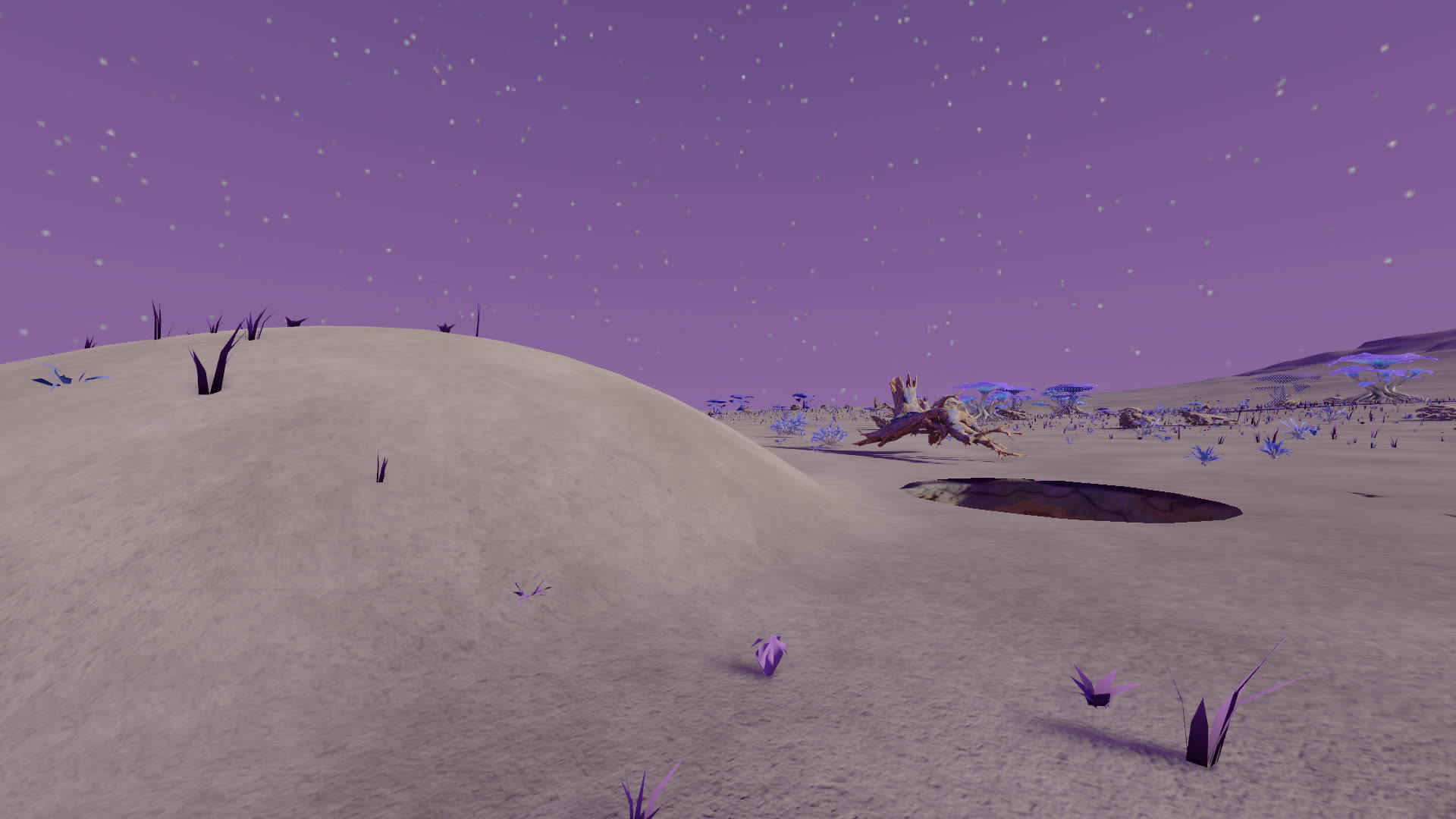
In-game captureAfter: a mound raised and a pit dug in play

The same for everyone
A change is made by the server, so it is the same for everyone in the match.
Later players see it too
Players who join later are sent the ground as it now is.
Kept between matches
The world keeps its changes between matches: the next match on it starts where the last one left off.
One world, shared by everyone in it
An online match on Asteron Verge runs on a server that holds the only copy of the world. When one player changes the ground, every other player sees the same change. Players far apart each have the ground around them.
Lose the connection and you can take your seat back while the match is still running; you are sent only what changed while you were away.

Then fight on it
Asteron Verge is played online, on the same changing ground. Bots fill empty seats and find their way across the land, over slopes, around rock and water, and over bridges.

What makes it work
- Generation
- A seed and a generator version decide the land; the same inputs give the same ground on every processor the game runs on.
- Streaming
- Ground is prepared in the background ahead of the player and kept within a fixed memory budget.
- Physics
- Bodies and shots meet the ground where it is drawn, caves included, and the rocks, trees and buildings that stand on it.
- Navigation
- Bots plan routes across slopes, around rock and water, and over bridges.
- Changes
- Each change is checked and applied by the server, numbered, and sent to the players whose ground it touches.
- Persistence and replay
- The server stores the world's changes as they happen and restores them after a restart, and a recorded match plays back on the same changed ground.
- Where it has run
- Recorded here on a Linux desktop with a dedicated graphics card. Android phones draw and play it, with quality profiles that draw less far: the low-end phone's profile draws no far ground and its bots decide too late to act. Windows has been checked on a software-rendered virtual machine only, and the browser version draws through WebGL2; WebGPU is not validated.